

The Macon Embodiment of Orthodox Traditions
November 19, 2025

In the heart of downtown Macon, just minutes from Mercer University, Holy Cross Greek Orthodox Church stands as a small but vibrant community where ancient ritual meets Southern hospitality. From the outside, its white pillars resemble a typical Southern Protestant church. However, beneath the surface, the radiant stained-glass, Byzantine chants (and English), and the carved wooden iconostasis transport visitors into a world of history and reverence. Although the service follows a strict structure, the members guide newcomers with open arms and care, nurturing an atmosphere that is both sacred and comfortable. Holy Cross blends ritual-filled worship with warmth and hospitality, creating an environment that feels both deeply spiritual and personal.
The story of Holy Cross begins in the late 1890s, when Greek immigrants in Central Georgia relied on visiting priests from Atlanta to hold services in homes and rented halls. After World War II, the community organized fundraisers and social events to sustain itself, eventually becoming an officially recognized parish in 1964. By 1976, they purchased their first building, a former Episcopal chapel, and later renamed themselves Holy Cross Greek Orthodox Church. In 2004, the congregation moved to its current downtown location, where it now serves over ninety families.

From the outside, the church is modest. Inside the sanctuary, however, pews face a carved wooden screen detailed with saints, known as iconostasis. Stained-glass and painted icons in Greek script fill the walls with color and scripture. A small chapel sits to the side for weekday services, while a parish house next door hosts coffee hours after worship. Near the entrance sits a small gift shop and vestibule connecting to the main sanctuary.

Services begin with Orthros, or morning prayers, and continue into the Divine Liturgy, lasting approximately two hours. Most of the liturgy was sung or chanted in Greek and English, creating a calm and reverent atmosphere. Congregants participate through gestures like crossing themselves, bowing, and softly responding “Amen.” Even for visitors unfamiliar with Greek, the rhythm of the service is clear, and the congregation’s deep respect for tradition is unmistakable. The center of worship is Holy Communion, following the collection of donations. Holy Communion is the central sacrament of worship, where bread and wine are transformed into the Body and Blood of Christ. The service ends with the “Lord’s Prayer”, followed by the Antidoron — blessed bread that, while not consecrated, is shared with all who attend.
The congregation is mostly Greek American families, often spanning several generations, though newcomers from different backgrounds are welcomed warmly. The community feels close-knit and family-oriented, with people greeting each other warmly before and after the service. After service, members often gather for fellowship in the nearby parish house. Despite the strong presence of Greek cultural identity, the congregation of Holy Cross is welcoming to all backgrounds.
Leadership is centered on Father Theodore Ehmer, who embodies the spiritual authority of the Orthodox priesthood with the warmth of community life. Father leads the Divine Liturgy through chants, scripture, and rituals, while also inviting children forward to share what they have learned in Sunday school. This act reassures parents and nurtures the next generation. Beyond worship, Father personally welcomes newcomers and calls out names during announcements. These announcements range from birthdays to simple wedding anniversaries; however, their simplicity reveals how close the Holy Cross community is.
Alongside Father Theodore, a Parish Council of elected lay members works with the priest and the Diocesan Bishop to oversee parish affairs. Meeting monthly, the council ensures the church’s needs are met and its traditions sustained. Together, clerical and lay leadership balance continuity with Orthodox practice and the responsibilities of supporting a growing parish.
Holy Cross sustains community life through programs that foster faith, fellowship, and cultural identity. Bible study groups and young men and women groups provide spaces and a sub-community to deepen their faith and fellowship. The choir leads hymns in both Greek and English, preserving tradition while guiding the liturgy. Midweek services such as Vespers provide intimate settings for prayer and reflection, complementing the more elaborate Sunday liturgies. Members describe the church’s ministries as collaborative, with clergy and lay members sharing responsibility for teaching, liturgical support, and fellowship.
Hospitality is central to Holy Cross’s identity. Visitors are greeted warmly by ushers, guided to seats, and invited to the fellowship meal. Traditions such as the Antidoron ensure that even non-Orthodox guests feel included. The church also embraces digital outreach, livestreaming services on Facebook and offers QR codes to help newcomers follow the liturgy.
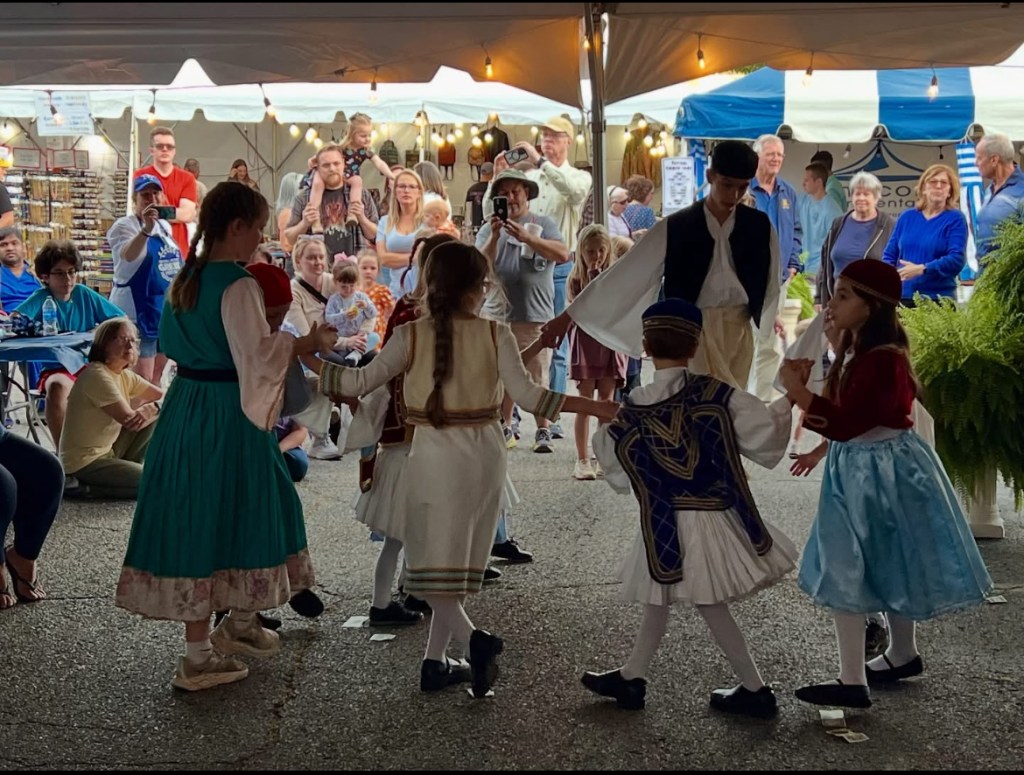
The annual Macon Greek Festival draws volunteers and visitors from across the city. With traditional food, music, and cultural displays, the festival raises funds while serving as a bridge between the Orthodox community and the public. Holy Cross demonstrates how a congregation can preserve heritage while opening doors to meaningful relationships in the wider community.
Like many congregations, Holy Cross faces challenges in balancing tradition with accessibility. The Greek language preserves traditional heritage; however, the language can be difficult for newcomers who do not understand. To bridge this gap, services are offered in both Greek and English, with pamphlets to guide visitors.
Another challenge is attendance and diversity. The congregation is predominantly white and usually of Greek heritage, with only a few participants of color. The clash between the cradle orthodox and converts seems inevitable. Because many of the cradle orthodox members are of an older generation, however, changes are made to accommodate the newer generation. To counter the low attendance and small congregation at Holy Cross, the congregation emphasizes hospitality. This emphasis involves greeting each visitor at the end of each liturgy, inviting all to fellowship meals, and ensuring non-members participate in traditions such as receiving blessed bread (antidoron).
Members of Holy Cross spoke about their experiences, reflecting on the congregation’s effort to preserve tradition while embracing change. The men’s group described both the challenges and rewards of building trust across generations. Tensions between cradle‑born Orthodox Christians and newer converts were acknowledged, but members explained that communication and compromise helped them find common ground. For many, Holy Cross feels like a united family. A spiritual home that offers belonging and purpose, especially during times of hardship. After a period of decline, the combined efforts of parishioners, the council, and Father Theodore have revived community life while sustaining Greek traditions.
Holy Cross expresses social justice not through political activism but through philanthropy rooted in Orthodox theology. Members emphasize that every person is created in the image of God, and they practice hospitality, mercy, and care for those in need. Programs for all ages, from Sunday school to Bible study, nurture faith and fellowship. The annual Greek Festival raises funds for the church and local charities, while stewardship programs and offerings sustain parish life. These practices reflect a model of sustainability that ties tradition to communal responsibility without making anyone feel obligated to give.
In comparison to more Protestant traditions in the South, such as Baptist, Methodist, and Presbyterian, Holy Cross represents different theological views and liturgical traditions. The Greek Orthodox church is deeply rooted in ancient scriptures and liturgical practices. It has sacramental theology and is highly ritualized with hymns, incense, and iconography. Protestant congregations emphasize contemporary worship styles that modernize, are sermon-centered, and individual interpretation of Scripture. Many Protestant congregations focus on personal experiences and personal conversion to teach. Ultimately, Holy Cross embodies a traditional form of worship rooted in ancient practices and a shared sacred space, in contrast to the Protestant churches whose worship style is on a more modern and personalized level. Even then, Holy Cross has been able to maintain its roots while invoking a greater community.
Holy Cross encapsulates the spiritual and communitarian aspects of Macon’s religious landscape. Situated in the heart of Downtown, the church weaves together faith and fellowship through its annual Greek Festival. Within its walls, the iconostasis and radiant stained-glass shine as enduring symbols of Orthodox tradition and hospitality. Even through cycles of growth and decline, Holy Cross remains a prominent and unique community of faith in Macon. It embodies the union of ritual-filled worship and hospitality, which fosters an environment of both spiritual and personal experience.
Ruchravee Panthung is a sophomore majoring in Chemical Commerce and Global Health
Ijeoma Omorogbe is a sophomore majoring in Industrial Management
Dulce Santiago is a sophomore majoring in Biology
 The Macon Religious Communities Project