

A Community Where You Belong
April 8, 2026
A church is more than a place of worship, it functions as a central institution that shapes community values, provides social support, and preserves cultural traditions. Vineville United Methodist Church located in Macon, Georgia is distinguished by its enduring sense of community and commitment to living out faith in tangible ways. Sitting at the corner of Vineville and Forest Avenue, it stands as one of the oldest United Methodist congregations in Macon. It is even older than the local United Methodist home. Vineville has stood on this site since 1897, and the construction of the current sanctuary was completed in 1926.
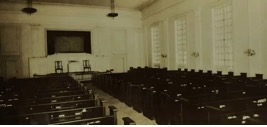
Vineville is currently led by Senior Pastor Jimmy Asbell, along with Associate Pastors Teresa Edwards and Sarah Hazelrig, supported by a dedicated staff that helps create a welcoming environment with a space where people of all ages can grow in faith.
Although Vineville is deep-rooted in tradition, it embraces new ideas, making it a meaningful and engaging place for individuals and families seeking both spiritual growth and a genuine sense of belonging. In an interview, one member described; the church’s program called “PleasantVille” (combining the neighborhood area Pleasant Hill with the church Vineville) which focuses on serving the local community during the Christmas season. During this time members collaborate to make Christmas cards, collect donations through selling Christmas packets to not only support the neighborhood but to send a Christmas package in each local elementary school students’ backpack for Christmas. This initiative creates a strong sense of belonging by making both members and non-members feel cared for and included in a supportive network. Vineville is known for its active outreach, strong musical heritage, and commitment to local engagement. This distinctive balance of warmth, purpose, and community involvement makes it more than just a place of worship but a vibrant hub of belonging and meaningful connection.

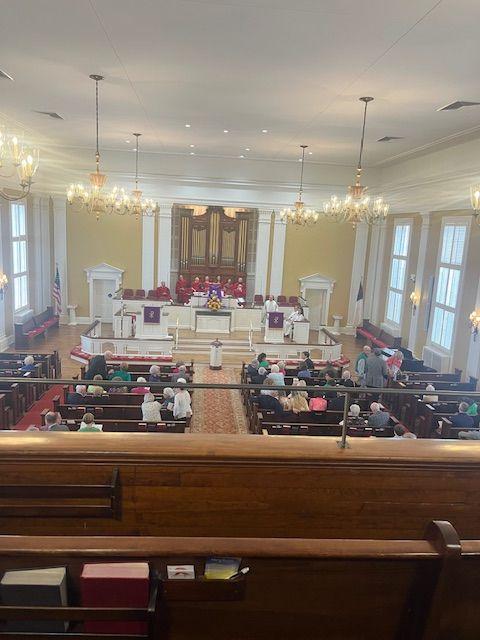
The physical space of Vineville reflects both its traditional roots and its evolving role in the community. The main sanctuary is arranged in a classic style, with rows of pews that contain hymnals, Bibles, and printed materials for worship. At the front, a central altar is decorated with flowers and candles, with a cross positioned behind it and the choir situated directly behind the altar. A large organ anchors the space, reinforcing the church’s emphasis on music as a central part of worship. At the same time, the broader church building extends quite a bit from this traditional setting. Hallways lead to classrooms, meeting areas, and spaces used for Sunday school, while a lobby area includes a coffee bar where members can gather informally before or after services. In addition, a gymnasium has been repurposed into a more modern worship space, demonstrating the church’s willingness to adapt to different styles of worship. The overall layout can feel complex, with numerous interconnected spaces, but this complexity reflects the variety of activities that take place within the church. Seasonal changes in decoration, particularly the use of colors associated with the liturgical calendar (also called the Christian Year), further connect the physical environment to the rhythm of the church year. For example, the shift from green to purple during Lent signals a period of reflection and preparation, visually reinforcing the themes emphasized in worship.
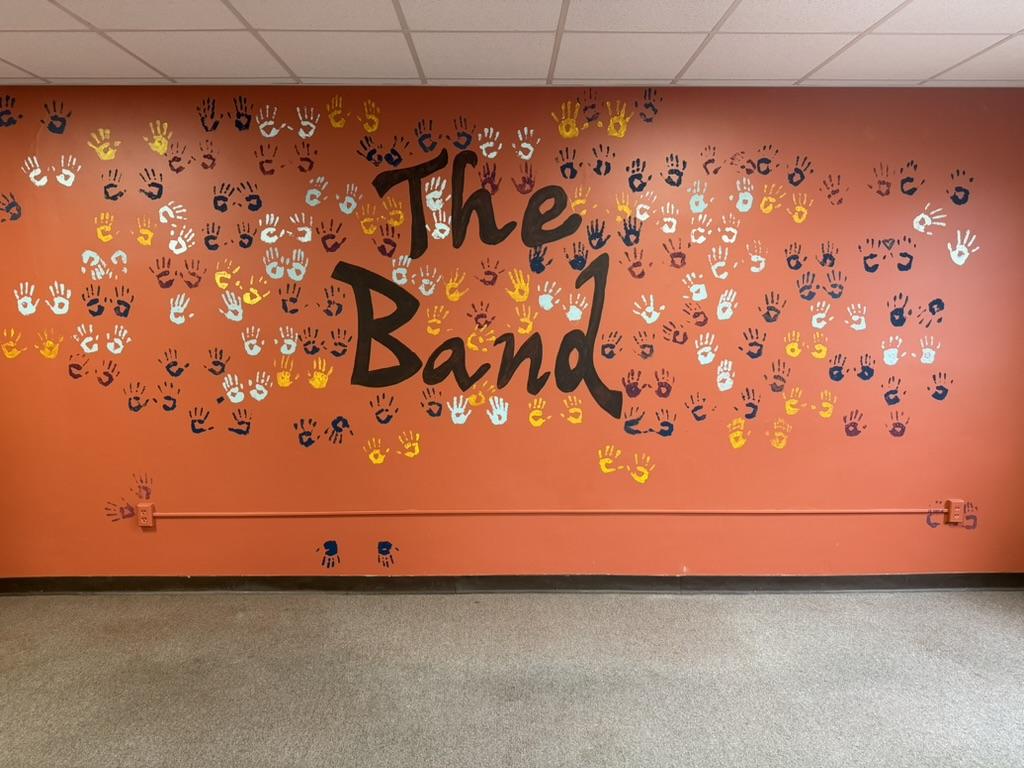
Another meaningful space within the church is, “The Band Room,” where youth gather to meet, spend time together, and build relationships. This room functions as an informal hub for connection, offering a relaxed environment where younger members can feel comfortable and included. One of its most distinctive features is a wall where members are invited to place their handprints after joining the church. This tradition serves as a visible symbol of belonging and personal commitment, representing each individual’s connection to both the church community and their faith. Importantly, there is no pressure for people to join the church, leaving a handprint is based on each person’s individual journey and readiness to commit to the congregation. This reinforces the idea that belonging at Vineville is not forced but grows naturally, allowing each person to express their faith journey in their own way.
Vineville offers worship services and practices that reflect the rich liturgical and theological traditions within the United Methodist church. There are two services offered at Vineville, the first service at 9:00AM offers a more modern atmosphere with a live band, while the second service is at 11:00AM with a more traditional style. Services typically blend structured elements such as scripture and responsive readings, the Lord’s Prayer, and sermons grounded in biblical teachings with vibrant singing of hymns and organ or instrumental backgrounds. Worship often follows the liturgical calendar, observing seasons of Advent, Christmas, Lent, and Easter.
The church recognizes two sacraments, Baptism which symbolizes a new life starting as young as infants and The Lord’s Supper, signifying repentance. Through this style of worship and practice the church seeks to create a sense of unity, marking progression on the same journey that encourages personal faith development and communal worship. While personally observing a Baptism here at Vineville I noticed it wasn’t just the parents of the child that were involved but also the members vowing to take on that responsibility to help that child flourish through Christ. Overall, the church’s approach vitalizes active participation and a shared purpose among its members.
The congregation is strongly centered around family life, with people of all ages involved. It is common to see grandparents, parents, and children attending together, which creates a clear sense of continuity within the church. Many members have long-standing ties to the congregation, while others are newer and often join through personal connections or recommendations. While the main worship service brings everyone together, smaller groups such as Sunday school classes play an important role in building closer relationships. Members often describe these groups as where they form the strongest connections. These classes involve regular attendance, discussion, and social activities, allowing relationships to develop naturally over time. In summary, the church has a strong emphasis on connection and community, where a sense of belonging grows through consistent involvement.
The Vineville United Methodist Church Foundation created in 1984 is the backbone for the church’s scholarships, outreach, and service projects. In the Macon area and even internationally, the church supports a variety of local and global initiatives focusing on meeting practical needs such as food and housing assistance. Members frequently participate in service projects such as Sleep in Heavenly Peace, which is one of the newer outreach ministries serving in two zip codes here in Macon where they have built over 600 beds for children in the community.
Vineville also serves on a more global level through their mission trips which are domestic and internationally on alternating years. Last year the church took a mission trip to Costa Rica to renovate a parsonage for a family that was living in the fellowship hall of their church. This is just a glimpse of the many outreach ministries that Vineville participates and assists in. Community impact is what sets Vineville apart, they are more than committed to making sure they use their resources to create and contribute to a flourishing community.
Like many long-established congregations, Vineville faces challenges related to changing patterns of participation and generational engagement. Traditional organizations within the church have experienced shifts in involvement, particularly as younger members balance competing responsibilities such as work, school, and family life. For example, groups that were once central to church life have seen declining participation, prompting the need for new approaches. In response, the church has adapted by developing more flexible and inclusive opportunities for involvement, including a wider range of service projects and ministry options. The presence of both traditional and contemporary worship services also reflects an effort to appeal to different preferences within the congregation. These adaptations demonstrate an awareness of broader social changes and an attempt to remain relevant while maintaining core traditions.
However, the leadership style makes any challenge easy to overcome. Leadership is shared among clergy, staff, and lay members with key decisions guided by church councils and committees that encourage broad participation from the congregation. This approach emphasizes accountability and inclusiveness, often seeking input from members to shape the church’s mission and priorities.
Through several interviews that were conducted we were able to see and hear the collaborative and creative efforts that go beyond just leadership. For instance, Vineville has a Flower Guild ministry group that oversees the altar flowers and rose buds. Altar flowers are flower arrangements placed on the altar to honor passed loved ones, each sermon there are new altar flowers and a new dedication. Overall, the leadership style balances structured organization with a strong emphasis on member involvement, servant leadership, and faithful stewardship.
Individual experiences within the congregation further illustrate how community is formed and sustained at Vineville. Many members describe becoming involved through personal relationships, whether through family connections, friendships, or prior experiences with the church. Over time, these initial connections often deepen through participation in smaller groups and ministry activities. For example, one member described becoming closely connected through a Sunday school class that emphasizes fellowship and regular interaction, eventually leading to greater involvement in other aspects of church life. Others shared stories of returning to the church after exploring different congregations, citing the strength of its community and programs as key factors in their decision. These experiences suggest that belonging within the church is not immediate but develops gradually through consistent participation and relationship-building.
In conclusion, Vineville United Methodist Church demonstrates how a church can create a strong sense of belonging through its welcoming environment, active community outreach, and meaningful opportunities for participation. By encouraging members to support one another and grow in their faith together, the church continues to be more than just a place of worship. Through its commitment to inclusion, shared experiences, and spiritual guidance, Vineville United Methodist Church continues to foster a deep sense of unity.
Karah Horner is a freshman at Mercer University majoring in Biology
Vee Sneed is a junior at Mercer University majoring in Criminal Justice

